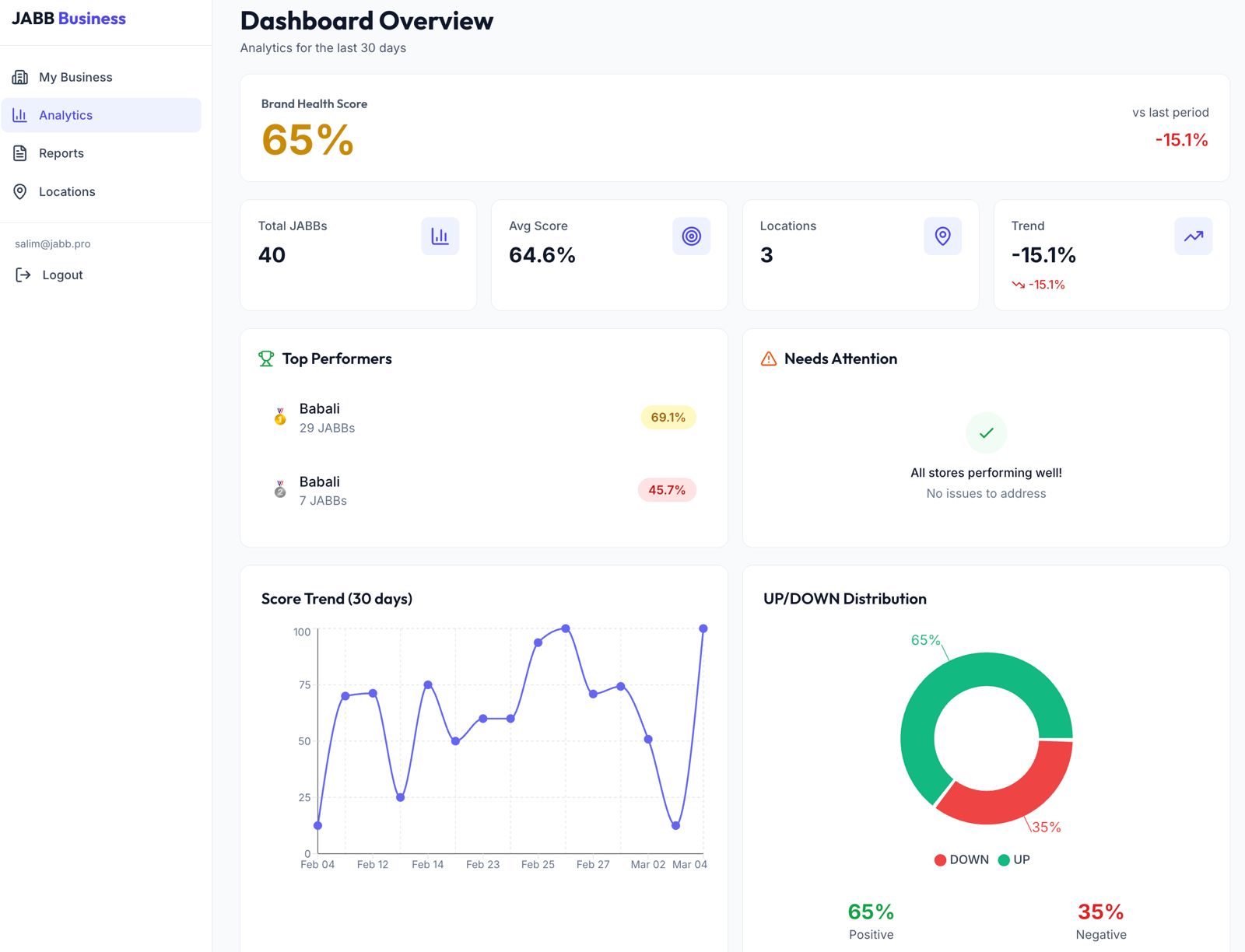
Retail multi-sites: pinpoint the true breaking point in-store before sales are lost

The real problem isn’t lack of data, it’s poor diagnosis
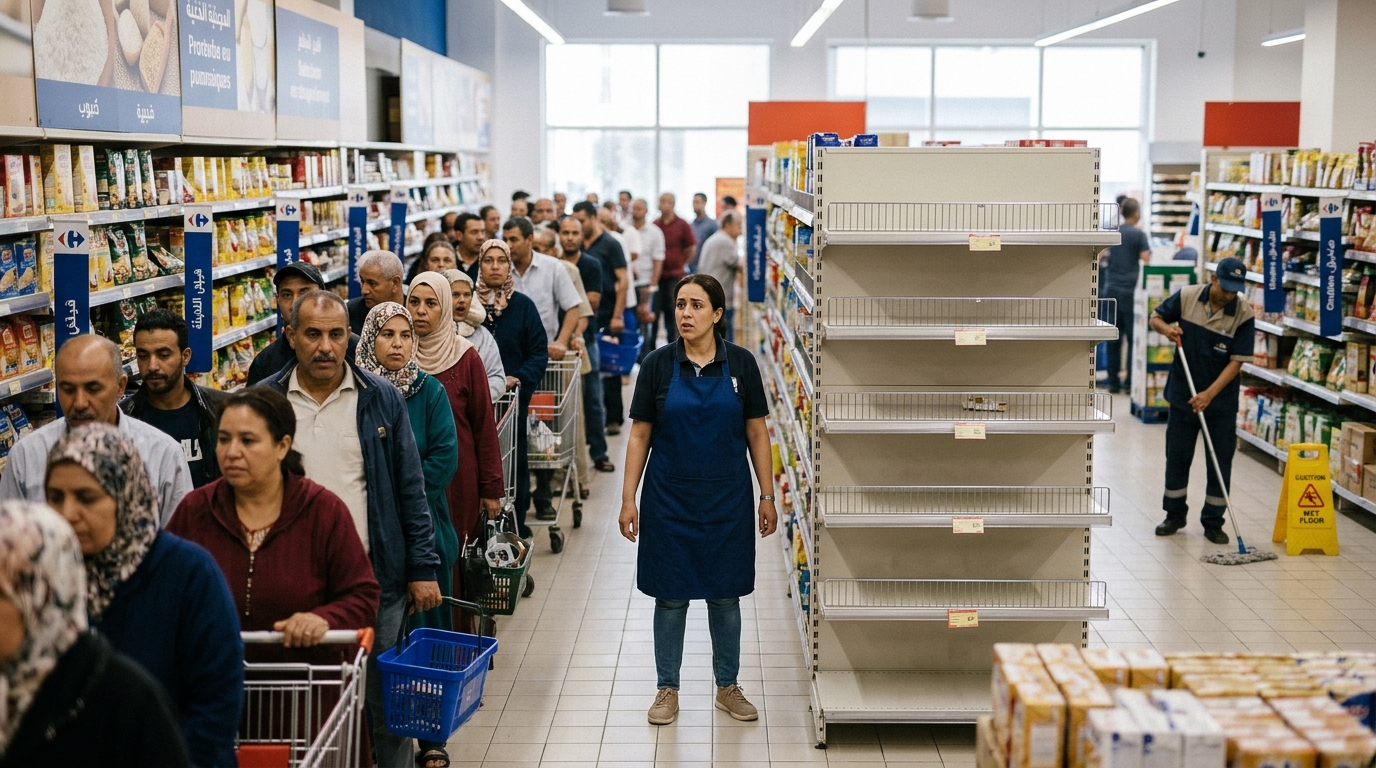
In retail multi-sites, the trap isn’t the absence of indicators: it’s reading each signal as if it were standalone. A slow checkout, a cold welcome or an empty gondola seem like separate issues, when they may stem from the same breaking point in-store.
The field quickly reveals this when you look at the right signals at the right level: waiting, welcome, cleanliness, product availability. If these elements degrade together at a site, lost sales don’t come from a vague “feeling,” but from a concrete defect to fix before it spreads across the network.
This is where JABB changes the reading: the customer’s voice, on-the-ground proof, and operational data connect to distinguish a one-off symptom from a true operational break. Instead of scattering teams, we first identify the site, the moment, and the weak link, then act.
Connecting the field to the site health score
At JABB, diagnosis doesn’t come from a single signal. It’s built by linking what the customer says, what the site experiences, and what the team executes.
The JABB App captures the customer’s voice in 30 seconds, no download needed. Meanwhile, Keeps reads operational signals on your existing cameras, without facial recognition, and turns observation into clear alerts.
- A review, photo or text is sent from the JABB App with the point of sale, channel and time of contribution.
- Keeps detects behaviors, queues, crowds or incidents, then sends a clear-language alert.
- JABB VOC aggregates these signals by site, team, hour and channel to highlight the site health score and rank the true causes.
What changes when prioritizing site by site
When managing a retail network site by site, you no longer treat a “bad score” as a single block. You isolate the true breaking point and act where sales are really lost, store by store.
With JABB VOC, field feedback is read by site, team, hour and channel. This allows distinguishing a problem with waiting, service, cleanliness or product availability, then launching the right action without diluting efforts.
| Signal measured in-store | What it reveals | Most useful action |
|---|---|---|
| Checkout waiting | The flow is poorly absorbed during a specific time slot | Reinforce the team, adjust checkout openings or smooth schedules |
| Welcome and service | A contact point degrades the experience | Review the brief, refocus the reception ritual and monitor the team concerned |
| Cleanliness | The standard isn’t maintained at the right time | Trigger a targeted intervention and verify restoration of compliance |
| Product availability / stock | The store promise doesn’t convert into purchase | Correct restocking, alert the right site and track the break until shelf replenishment |

How to start without overloading your teams
The simplest is to start with a single pilot site. The goal isn’t to measure everything, but to track a few basic indicators related to waiting, welcome, cleanliness, service and payment.
With JABB VOC, each signal feeds into a clear cockpit, then triggers actionable alerts on the concerned site. Your teams see what to fix, where, and in what order, without adding unnecessary reporting layers.
Then keep a short loop: observe, correct, verify, then extend to other points of sale. This is the right way to move from pilot to network, with a stable method and actions that stay close to the field.
Book a demo to set up a simple, measurable pilot with JABB VOC.